
Just Another Pre-Grant Audit
Pre-grant due diligence is often experienced as a gatekeeping exercise - necessary, but rarely welcomed. Footbridge assessor Alexis Curtis writes from the field about what the process feels like on both sides, and why getting the balance right matters more than most funders realise.
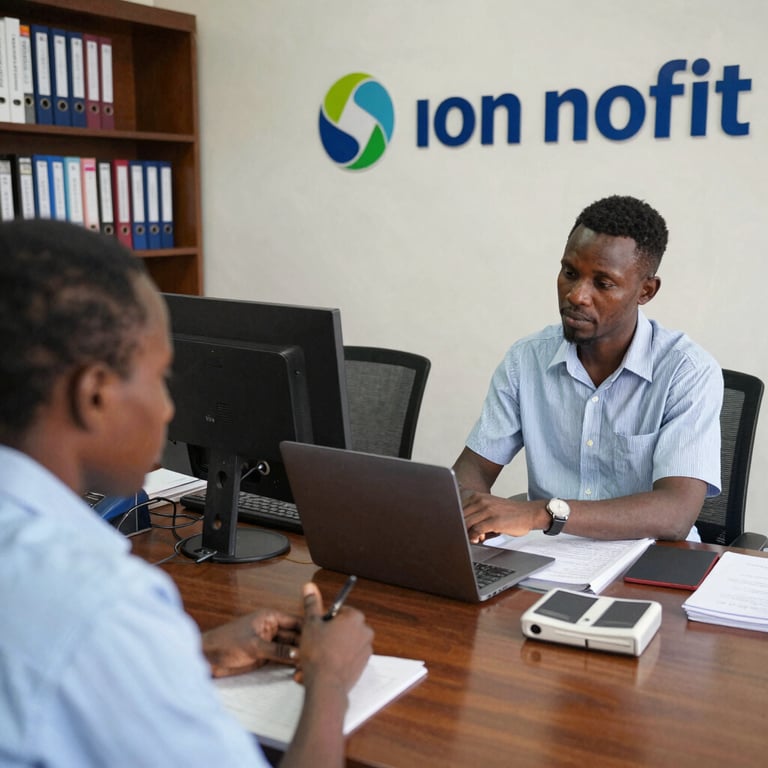
AI Generated Image
For global funders, due diligence is often a balancing act: how do you ensure accountability without creating unnecessary barriers for the very organizations you’re trying to support? I have encountered this tension throughout my career in international development, but it became especially clear to me while conducting funder commissioned pre-grant due diligence assessments of NGOs, as a consultant for Footbridge.
I conducted organizational assessments for a few civil society organizations in Francophone West Africa. What drew me to this work initially was the rigor of the framework being used, paired with the humility and care that the team brought to each assessment. What stayed with me, though, were the people!
One NGO from Benin, that I assessed, had just one full-time salaried staff member - a young leader in Benin working to address harmful traditional practices affecting women and girls. Supported by a part-time Operations Director, a committed board, and a network of volunteers and interns, he is empowering youth to be champions for sexual and reproductive health. building something remarkable. Here was someone operating with a fraction of the resources many organizations take for granted, yet creating tangible, meaningful change every day.
Spending time with him was inspiring and, if I’m honest, a little disorienting. My role was to examine various aspects of his organization (across eight pillars - Governance, Financial Management, Legal Compliance, Operational Planning and Continuity, Risk Management, Community Engagement, Data Security and Privacy, Safeguarding), and ultimately advise a potential funder on risk. To him, I represented scrutiny, resources, and decision-making power. The imbalance of power in the assessment process was real, but so was my deep respect for the work he was leading. Like many other times I have felt while engaging with high-impact grassroots agencies, I was humbled and awestruck. In my engagements with the leader and his team, my assessments and my final report, I ensured that they demonstrated this respect and sensitivity for his challenging work that I felt.
This is why Footbridge’s assessment approach - using industry vetted frameworks - stands out to me. Its partner capacity assessments are rigorous and context-sensitive. Rather than applying a one-size-fits-all standard, assessments are tailored to the size of the organization, the environment in which it operates, and the scale of funding being considered.
Yes, my role was to vet organizations ahead of funding decisions. But just as importantly, it was to provide recommendations that could be built into the award itself, practical, context-aware steps to strengthen the organization over time.
In practice, that means combining detailed document review with direct engagement. This includes conversations with leadership, iterative follow-ups, and a close look not just at policies, but at how things actually work day to day. Financial management, governance, safeguarding, and data security are all assessed, but always through a lens grounded in local context and operational reality.
Each assessment produces clear, actionable recommendations, guidance that organizations can use to strengthen governance, improve internal controls, increase transparency, and better safeguard the communities they serve. The final output is not just risk identification and a rating for funders. It is a resource for the organizations themselves; making the due diligence process a part of the organization’s growth and more than just a gatekeeping exercise.
For funders supporting NGOs and social businesses that operate in complex and under-resourced environments, this kind of approach is essential. Due diligence should build confidence in funding decisions, but it should also respect local realities, ensure consistency across diverse portfolios, and contribute to long-term partner success. When we get that balance right, the process strengthens the people and organizations doing the work that matters most; along with its mandate of enabling funding decision-making.
About the Author: Alexis Curtis is a Washington DC based, multilingual, international Development professional. An operations and performance management leader, she specializes in conducting grantee organizational assessments and due diligence. Connect with Alexis on Linkedin.